How Tree Services Help Mitigate the Risk of Wildfires
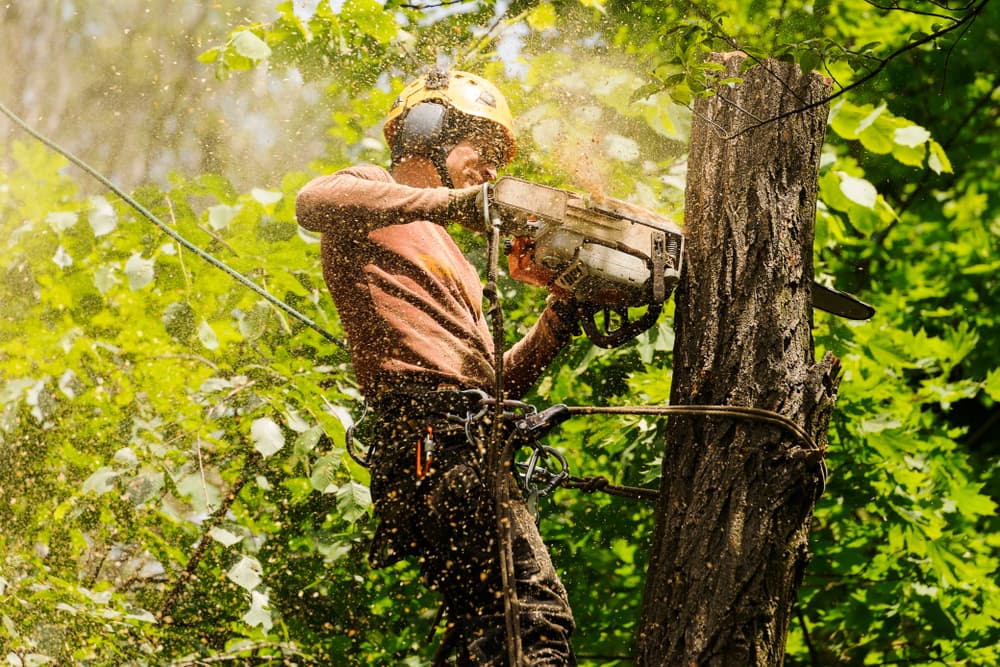
The risk of wildfires is a significant concern for homeowners, especially in regions prone to dry weather conditions and vegetation-rich landscapes. In such areas, trees and shrubs can act as fuel for fires, making it essential to manage and maintain them properly to reduce the likelihood of a fire spreading. Tree services play a vital role in mitigating the risk of wildfires by providing expert care and maintenance that can significantly decrease the chances of trees becoming dangerous hazards. This article will explore how professional tree services contribute to wildfire prevention and ensure the safety of homes and properties in fire-prone areas.
1. Creating Firebreaks through Tree Removal
A key strategy for wildfire prevention is creating firebreaks—areas devoid of combustible vegetation or trees that can act as barriers to a spreading fire. Tree services can help create these firebreaks by selectively removing trees that are too close together or located near critical structures such as homes, fences, and power lines. By thinning out dense tree clusters, tree services reduce the chance of fires spreading from one tree to another, ultimately reducing the intensity and speed at which the fire can travel. In some cases, they may also remove trees in particularly high-risk areas to create wide enough firebreaks that can act as a protective shield for the property.
Proper tree thinning not only helps to protect homes but also ensures that fire-fighting teams can access the property easily if a fire were to occur. The removal of trees that are too close to one another allows fire crews to maneuver safely and efficiently when combating fires.
2. Pruning to Remove Dead or Diseased Branches
Dead or diseased trees and branches are more likely to catch fire due to their dry and brittle nature. Tree services can mitigate this risk by conducting routine pruning to remove any deadwood, which can be a major source of fuel in the event of a wildfire. Pruning also helps maintain the structural integrity of trees, preventing weak or broken branches from falling and creating fire hazards in the surrounding area.
Moreover, tree services can selectively prune living trees to ensure that their canopies are properly spaced. This prevents excessive overlapping of tree branches, which can facilitate the spread of fire from one tree to another. By creating gaps between branches, tree services help minimize the fire’s potential to spread through tree crowns, which is one of the most dangerous ways a wildfire can spread.
3. Clearing Underbrush and Excessive Vegetation
While trees are often the primary concern in wildfire prevention, underbrush and excessive vegetation can also contribute significantly to fire risk. In many cases, dry grass, shrubs, and fallen leaves act as tinder, which can quickly catch fire and spread to nearby trees. Professional tree services assist with clearing underbrush and reducing vegetation density around trees. By removing this fuel source, they help to slow down or prevent the spread of a fire.
Tree services can also clear debris such as fallen branches, leaves, and pine needles from around trees. This debris, if left unchecked, can pile up and provide an ideal environment for fire to take hold. By regularly clearing away these materials, tree services help to maintain a safer, fire-resilient landscape around properties.
4. Removing Hazardous Trees and Limbs
Certain trees and limbs pose a greater risk to the surrounding area due to their condition or proximity to structures. Trees that are dead, decaying, or otherwise structurally compromised are more likely to fall, especially during strong winds or storms. These fallen trees can obstruct fire-fighting efforts and increase the overall risk of a fire spreading to nearby structures. Tree services can identify hazardous trees and limbs and remove them safely before they can pose a threat.
Additionally, tree services will evaluate the proximity of trees to homes and power lines. Trees that are too close to structures or electrical wires can lead to dangerous fire risks, especially during high winds. Properly managing the growth of trees near such areas ensures that they do not become an ignition source for wildfires.
5. Clearing Tree Canopies and Limbs Above Rooflines
A critical aspect of wildfire prevention is the distance between tree canopies and rooftops. Trees that grow too close to buildings can allow fire to climb from the ground to the roof, which is often the most vulnerable part of the structure. Tree services play a key role in reducing this risk by trimming or removing limbs that overhang roofs and are within close proximity to buildings.
By clearing tree canopies and limbs that extend over the roof, tree services help prevent embers from catching on the foliage and igniting the roof or the interior of the home. In areas with dry conditions, this precaution can be especially valuable in minimizing the spread of a fire from nearby vegetation to a residential property.
6. Applying Fire-Resistant Treatments
In addition to physical tree management, some tree services offer the option of applying fire-resistant treatments to trees and plants around the property. These treatments help to reduce the combustibility of tree bark and foliage, making them less likely to catch fire if exposed to heat or flames. These treatments typically consist of non-toxic, environmentally friendly chemicals that can be sprayed on trees to increase their resistance to fire.
While these treatments are not a replacement for proper tree maintenance, they can provide an added layer of protection in areas where wildfires are a significant risk. Tree services with experience in fire prevention will be able to advise on the appropriate use of such treatments based on the specific environment and conditions in the area.
7. Assessing Tree Health and Implementing Long-Term Maintenance Plans
Tree health plays an important role in wildfire prevention. Healthy trees are less likely to be damaged by storms, pests, or diseases, all of which can make them more vulnerable to fire. Tree services help mitigate wildfire risk by assessing the health of trees and recommending proper care and treatments.
A well-maintained tree that is properly pruned, regularly inspected, and free from diseases is less likely to become a fire hazard. Tree services can implement long-term maintenance plans that ensure trees remain strong and resilient, reducing the potential for fire-causing damage. Such plans might include regular pruning, pest control, fertilization, and irrigation to keep trees in peak condition.
8. Providing Emergency Storm Cleanup and Prevention
In addition to regular tree care, tree services often provide emergency storm cleanup and preventative measures after severe weather events. High winds, lightning, and dry conditions can all contribute to the risk of wildfires, and tree services can address these hazards promptly by removing any damaged trees, broken limbs, or debris that could become fuel for a fire. Their prompt response helps to reduce the risk of a fire taking hold in areas that have already been affected by storms or other adverse weather conditions.
In fire-prone areas, tree services are essential in managing and maintaining a landscape that is both healthy and safe. From thinning trees to removing hazardous limbs and creating firebreaks, professional tree care ensures that homeowners can enjoy a beautiful and secure environment without compromising their safety. By engaging with tree services regularly, property owners can significantly reduce the risk of wildfires and create a more fire-resilient landscape that protects both their homes and the surrounding ecosystem.