How to Pair Your Kitchen Countertop with Your Dining Area

When designing a home, it’s important to create spaces that feel cohesive and harmonious. The kitchen and dining area, often adjacent to one another, present a unique opportunity to blend functionality and style. One of the key elements in achieving this harmony is selecting the right kitchen countertop that complements the dining area. While both spaces serve different functions, they can work together seamlessly by considering material, color, and design choices. Below, we explore how to thoughtfully pair your kitchen countertop with your dining area to create a visually appealing and functional flow between the two spaces.
1. Understand the Aesthetic of Your Dining Area
Before choosing a countertop material, take time to evaluate the style and ambiance of your dining area. The dining space is where you gather with friends and family, and it should reflect a sense of warmth and comfort, but also sophistication. If your dining area features sleek, modern furniture with clean lines and minimal decoration, you may want to choose a countertop material that mirrors this contemporary vibe, such as quartz or concrete. On the other hand, if your dining room embraces a more traditional, rustic aesthetic with natural wooden elements, a classic material like butcher block or granite may better suit the style of your space.
Matching the aesthetic of your kitchen countertop to the dining area helps create a unified atmosphere that feels intentional rather than disjointed. Ensure that the design elements in both spaces are complementary, as this will ensure a seamless transition between them.
2. Match Materials for a Cohesive Look
Selecting the right materials for both your kitchen countertop and dining table is an important step in creating visual harmony. However, this doesn’t mean that both must be identical. In fact, contrasting materials can bring depth and interest to the design. For instance, pairing a marble countertop in the kitchen with a wooden dining table creates a beautiful balance between elegance and warmth. The polished marble reflects light and enhances the sense of luxury in the kitchen, while the natural wood brings a grounding effect to the dining area.
If you prefer a more uniform look, choose similar materials for both spaces. For example, a consistent material such as quartz in the kitchen can be mirrored in the dining table. This will create a refined, polished appearance throughout the home, evoking a sense of cohesion.
Another option is to play with textures and finishes. For example, a matte finish for the countertop can be paired with a glossy or textured dining table to create visual intrigue without disrupting the overall flow. This approach gives a sense of unity without making both spaces feel too similar or monotonous.
3. Consider Color Coordination
The color of your kitchen countertop should be carefully selected to coordinate with the dining area, but it doesn’t necessarily need to match perfectly. Instead, look for tones and hues that complement each other. If your kitchen features a vibrant, bold countertop color, it’s important to tone down the dining area with more neutral or complementary shades. For instance, a rich navy blue countertop could pair beautifully with a soft gray dining table and white chairs. Alternatively, a marble countertop with gray veining can be complemented by a dining area in soft, muted tones to allow the countertop to remain the focal point of the space.
If your kitchen is outfitted with neutral-toned countertops, such as beige granite or white quartz, the dining area offers more flexibility. You can introduce bolder colors, textures, and patterns to bring vitality and interest to the space. However, even when using contrasting colors, maintaining a balance is crucial. Avoid overwhelming the senses by pairing too many bold colors or busy patterns in both spaces.
4. Integrate Functional Flow Between Spaces
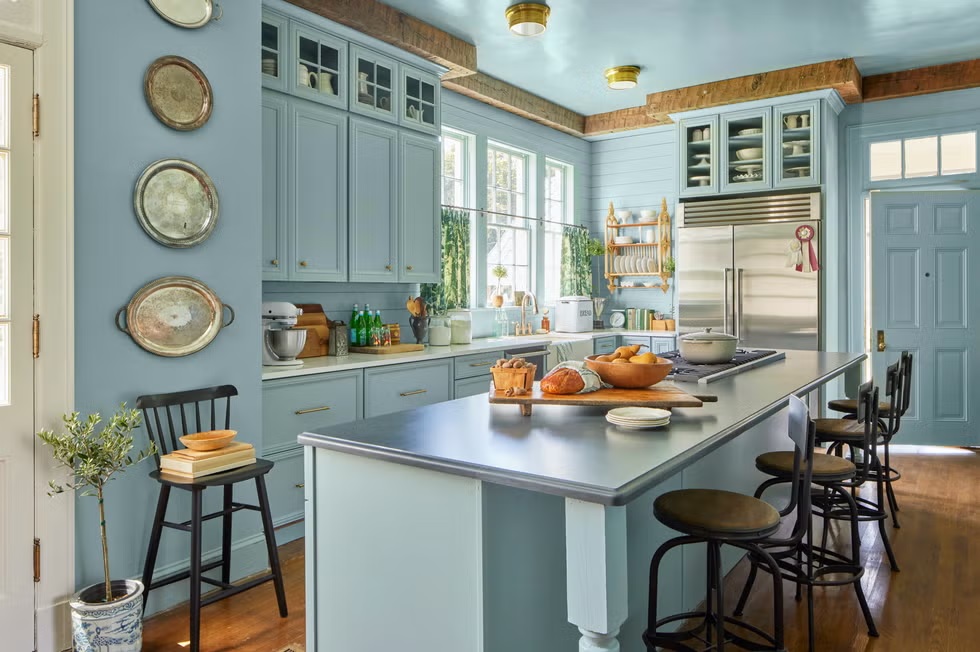
While aesthetics are important, so too is the functionality of your kitchen and dining area. The flow between these two spaces must be considered from a practical standpoint. The layout of your kitchen and dining area should allow for easy movement and interaction. For example, if your kitchen countertop includes an island or breakfast bar, ensure that it doesn’t obstruct the flow of traffic between the two areas. A counter that opens to the dining space, whether through an overhang or a low bar, can create a natural connection between the two spaces, encouraging conversation while you prepare meals.
The design of your countertop should also consider the potential for spills and stains, especially if you are frequently entertaining or have children. Choose materials that are easy to clean and can withstand the demands of both cooking and dining. For instance, a durable material like quartz is low-maintenance and resistant to stains, making it ideal for busy kitchens and homes where meal preparation often spills into the dining area.
5. Blend Lighting and Accessories
Lighting plays a significant role in creating a cohesive look between the kitchen and dining area. Both spaces should feel connected under a consistent lighting scheme. Pendant lights above the kitchen island or countertop should complement the lighting in the dining room, whether through the use of similar fixtures or matching styles. The goal is to create a unified atmosphere that ties the two areas together visually.
Accessories, such as table settings, decorative bowls, or vases, can also help bridge the gap between your kitchen and dining area. Consider using similar materials or colors in your dining accessories as those found in your kitchen countertop. A set of marble salt and pepper shakers or a wooden fruit bowl can echo the materials found in the kitchen, creating subtle ties between the two spaces without overwhelming the design.
6. Consider the Scale and Proportions
When pairing your kitchen countertop with your dining area, it’s essential to pay attention to the scale and proportions of each element. Large countertops should be balanced with a proportionate dining table to maintain a sense of harmony. If you have a substantial kitchen island or expansive countertop, opt for a more modest-sized dining table to avoid overwhelming the space. Conversely, a small kitchen area should be complemented by a slightly more substantial dining table to maintain a sense of balance.
This consideration of scale extends to the design of the countertop itself. A minimalist kitchen with simple, sleek lines will pair best with a streamlined dining table, while a more intricate countertop, such as one with intricate veining or a bold color, should be balanced with a simpler dining table design.
7. Think About Longevity and Versatility
Lastly, when pairing your kitchen countertop with your dining area, consider the longevity and versatility of both materials. Select surfaces that will not only look great today but will continue to enhance your space for years to come. Timeless materials such as granite, marble, and quartz have enduring appeal and can complement a wide range of dining room styles, ensuring that your kitchen and dining area continue to feel fresh and cohesive as trends evolve.
By focusing on materials, colors, functionality, and design balance, you can create a kitchen and dining area that harmonizes beautifully. This thoughtful pairing will ensure that both spaces serve their purpose while contributing to a home that feels unified and welcoming.